



Can Immunotherapy Cure Stage 4 Cancer? What Patients in India Need to Know
When a doctor says “Stage 4 Cancer,” it feels like a door closing. For decades, that phrase meant limited options and difficult conversations about time. But in 2026, the reality for many patients is profoundly different — and immunotherapy is a significant reason why.
At Denvax, we have been treating cancer patients with immunotherapy for over a decade. We have watched patients with Stage 4 diagnoses go on to live years — sometimes many years — beyond what their original prognosis suggested. This is not wishful thinking. It is the result of a fundamental shift in how we understand and fight cancer.
This article is for patients and families who have received a Stage 4 diagnosis and are trying to understand whether immunotherapy is a realistic option. We will give you honest, evidence-based answers.
What Does Stage 4 Cancer Actually Mean?
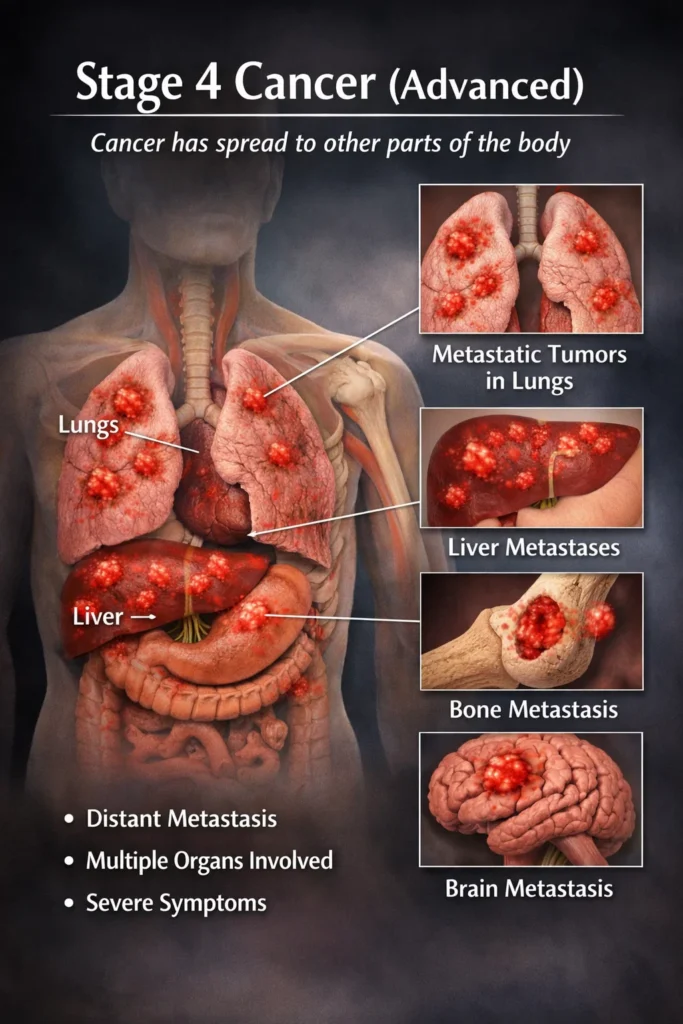 Stage 4 means cancer has spread (metastasised) from its original location to other parts of the body — lymph nodes, distant organs such as the liver, lungs, bones, or brain. It does not mean the cancer cannot be treated or that treatment cannot meaningfully extend life and quality of life.
Stage 4 cancer is a clinical descriptor, not a verdict. The prognosis varies enormously depending on:
– The type of cancer (lung, breast, colon, blood cancers all behave differently)
– How widely it has spread and to which organs
– The patient’s overall health and immune system strength
– The biology of the tumour — its specific mutations and markers
– The treatment received
We have treated Stage 4 Cancer patients at Denvax where, within months of beginning immunotherapy, tumour burden reduced significantly. We have also treated patients where progress was slower. Honesty demands we acknowledge both realities.
How Immunotherapy Works Against Stage 4 Cancer?
Standard cancer treatments — chemotherapy and radiation — work by killing cells directly. The problem is they cannot distinguish perfectly between cancer cells and healthy cells, which is why side effects are often severe.
Immunotherapy works differently. It does not attack cancer directly. Instead, it trains, activates, or enhances your own immune system to recognise and destroy cancer cells.
Your immune system already has the machinery to fight cancer. In fact, your body identifies and destroys abnormal cells on a daily basis. Cancer’s greatest trick is its ability to hide from the immune system — it puts up “shields” that tell immune cells “I am normal, leave me alone.” Immunotherapy removes those shields.
At Denvax, we specialise primarily in Dendritic Cell Therapy, one of the most sophisticated forms of immunotherapy available in India. Dendritic cells are the generals of your immune system — they are the cells that identify threats and instruct the T-cells (soldiers) exactly what to attack. When we take your own dendritic cells, educate them about your specific cancer, and return them to your body, we are essentially giving your immune system a precise, personalised briefing.
What the Evidence Shows for Stage 4 Cancer Patients?
The honest answer to “can immunotherapy cure Stage 4 cancer?” is: sometimes yes, often it controls the disease for significantly longer than previously possible, and in some cases, it transforms Stage 4 from a terminal diagnosis into a manageable chronic condition.
Here is what the current evidence shows for specific cancers:
Lung Cancer (Stage 4): Pembrolizumab (Keytruda) has extended median survival in Stage 4 non-small cell lung cancer patients with high PD-L1 expression from approximately 12 months on chemotherapy to over 26 months. Some patients are in long-term remission.
Melanoma (Stage 4): Previously one of the deadliest cancers when metastatic, immunotherapy with checkpoint inhibitors has produced 5-year survival rates of around 40–50% in some trials — a transformation from single-digit percentages a decade ago.
Bladder Cancer: Immunotherapy is now a first-line treatment for locally advanced and metastatic bladder cancer, with meaningful response rates and extended survival.
Kidney Cancer: Combination immunotherapy approaches have doubled median progression-free survival compared to older treatments.
Blood Cancers (Lymphoma, certain Leukaemias): Immunotherapy including CAR-T Cell Therapy has produced complete remissions in patients who had exhausted other options.
Solid Tumours Generally: Dendritic Cell Therapy has shown the ability to reduce tumour burden and improve quality of life across multiple cancer types, including those where other treatments have limited effectiveness.
What Factors Determine Whether Immunotherapy Will Work for You?
Not every patient responds to immunotherapy — and any doctor who tells you otherwise is not being honest with you. Response depends on several factors:
1. Tumour Mutational Burden (TMB)
Tumours with more mutations tend to be more visible to the immune system and often respond better to immunotherapy. A genomic biopsy test can reveal this.
2. PD-L1 Expression
For checkpoint inhibitor treatments, how much PD-L1 (a protein that cancer uses to hide from immune cells) the tumour expresses is a key predictor of response.
3. Immune System Baseline
Prior treatments like heavy chemotherapy can suppress the immune system. Immunotherapy works best when the immune system still has the capacity to mount a response. This is why we often recommend considering immunotherapy earlier in the treatment journey, not as a last resort.
4. Cancer Type and Location
Some cancers are historically more responsive to immunotherapy. Melanoma, lung, bladder, kidney, and certain head and neck cancers have shown the strongest responses. Others are responding increasingly well with newer approaches.
5. Overall Health
Severe organ dysfunction, autoimmune conditions, or very advanced general deterioration may limit which immunotherapy approaches are appropriate.
At Denvax, we conduct a thorough evaluation before recommending any treatment. We do not offer immunotherapy to every patient who walks through the door — we offer it to patients for whom it represents a genuine opportunity.
The Denvax Approach: Personalised, Pioneer-Led Immunotherapy
Dr. Sharmin Yaqin and I established Denvax on a single principle: every cancer patient deserves a treatment that is designed for their biology, not a protocol designed for the average patient. Cancer is not average. It is personal.
Our approach centres on Dendritic Cell Therapy because it is, by its nature, personalised. We use
your own cells. We educate them using antigens from your specific tumour. We return a trained immune response tailored to your cancer.
We combine this with:
– Comprehensive biomarker testing to determine which therapies will be most effective for your specific tumour
– Integration with chemotherapy or targeted therapy where the science supports it
– Monitoring of immune response markers to assess how treatment is working
– A multidisciplinary team review for every patient
What Stage 4 Patients Tell Us
One of the most common things patients say when they first come to us is: “I was told there is nothing more to do.” We understand why they were told that — within the framework of conventional treatment alone, that may have been true. But immunotherapy changes the framework.
Another thing we hear often is: “I wish I had come here earlier.” We do not say this to create guilt. We say it because it highlights a genuine issue — immunotherapy is most effective when the patient’s immune system is intact. Starting immunotherapy after years of heavy chemotherapy or radiation is harder than starting it earlier. If you or a family member has a cancer diagnosis at any stage, it is worth asking your oncologist: “Is immunotherapy appropriate at this point?”
Questions to Ask Before Starting Immunotherapy
If you are considering immunotherapy for Stage 4 cancer, here are the questions we recommend asking any centre you consult:
1. What type of immunotherapy do you offer, and why is it appropriate for my cancer?
2. What testing do you conduct before treatment to determine likely response?
3. What does the treatment protocol look like — how many sessions, how often, over what period?
4. What side effects should I be prepared for?
5. How do you monitor whether treatment is working?
6. What happens if the first approach does not produce the desired response?
Frequently Asked Questions
Q: Is Stage 4 cancer curable with immunotherapy?
A: In some cases, yes — complete and durable remissions have been documented across multiple cancer types. More commonly, immunotherapy transforms Stage 4 from a rapidly fatal condition into a manageable disease where patients live significantly longer with good quality of life. The outcome depends on cancer type, tumour biology, immune system status, and the specific immunotherapy used.
Q: Can immunotherapy be used alongside chemotherapy for Stage 4 cancer?
A: Yes. Combination approaches — using immunotherapy alongside targeted chemotherapy — often produce better results than either alone. The evidence for specific combinations varies by cancer type. At Denvax, we evaluate each patient individually and design a protocol based on what the science supports for their specific situation.
Q: How long does it take to see results from immunotherapy?
A: Unlike chemotherapy, immunotherapy activates a biological response that takes time to build. Many patients see measurable responses within 3–6 months. Some experience an initial period where imaging may suggest the tumour is growing (as immune cells flood to the site) before shrinkage follows — this is called pseudoprogression. Response monitoring with the right markers is important.
Q: Is immunotherapy available for all types of Stage 4 cancer?
A: Immunotherapy approaches exist for nearly all cancer types, though the evidence base and expected response rates vary. Some cancers (melanoma, lung, bladder, kidney) have the strongest evidence. Others are increasingly well-supported. We will give you an honest assessment of the likely benefit for your specific cancer type.
Q: What does immunotherapy cost for Stage 4 cancer in India?
A: Costs vary significantly depending on the type of immunotherapy and the treatment protocol. Dendritic Cell Therapy protocols at Denvax are substantially more affordable than comparable treatments in the US or Europe. For a personalised cost estimate, we recommend booking a consultation where we can assess your case and provide a clear treatment plan.
Q: Is Denvax’s immunotherapy covered by insurance?
A: Insurance coverage for immunotherapy in India is improving but not universal. Our team can assist you in understanding what your policy may cover and provide the documentation insurers typically require.
Take the Next Step
If you or a family member has been diagnosed with Stage 4 cancer, we encourage you to book a consultation at Denvax. You will speak directly with our team, receive an honest assessment of whether immunotherapy is appropriate for your situation, and understand exactly what treatment would look like.
A diagnosis is not the end of the story. Let us help you write the next chapter.
*Dr. Jamal A. Khan is a leading cancer immunotherapist and founder of Denvax India. Dr. Sharmin Yaqin is Director of Denvax India and a specialist in clinical immunotherapy. Together, they have treated hundreds of cancer patients using personalised immunotherapy protocols. Denvax is a pioneer in Dendritic Cell Therapy in India.*
- DASH Diet: Your Guide to a Healthier Heart and Lower Blood Pressure
- Chemotherapy vs Immunotherapy: Key Differences, Which Is Better & Costs in India (2026)